Key learnings:
Metal Halide Lamp Definition: A metal halide lamp is a high-intensity discharge lamp that produces light by an electric arc through vaporized mercury and metal halides.
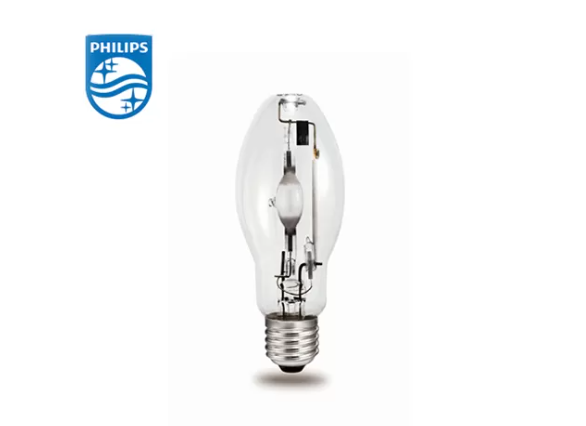
Components: It includes a glass bulb, arc tube, electrodes, starter electrode, glass stem, molybdenum wires, base, and gas mixture.
Working Principle: The lamp operates by creating an electric arc inside the arc tube, which is controlled by an electrical ballast.
Advantages: These lamps provide high luminous efficacy, excellent color rendering index, and a long lifespan.
Disadvantages: They require a warm-up period, have a high initial cost, operate at high temperatures, emit ultraviolet radiation, and may flicker.
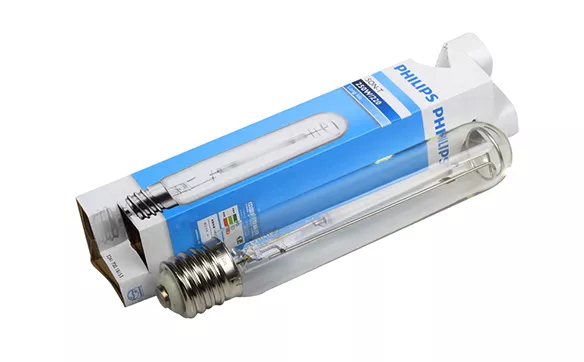
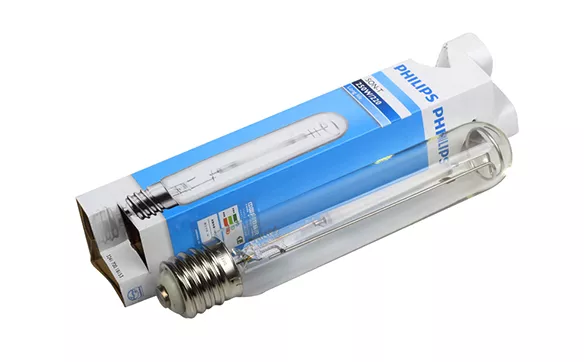
A metal halide lamp is a type of high-intensity discharge (HID) lamp that generates light through an electric arc in a gaseous mixture of vaporized mercury and metal halides. Metal halides, which are compounds of metals with bromine or iodine, enhance the light’s efficiency and color quality. These lamps are widely used for both indoor and outdoor lighting in commercial, industrial, and public spaces, as well as for parking lots, sports arenas, factories, retail stores, residential security lighting, and automotive headlights.
What is a Metal Halide Lamp?
A metal halide lamp is an electrical lamp that produces light by an electric arc through a gaseous mixture of vaporized mercury and metal halides. The arc forms between two electrodes inside a small fused quartz or ceramic arc tube, which is enclosed in a larger glass bulb coated to filter ultraviolet light. The arc tube functions at high pressure (4–20 atmospheres) and high temperature (~1000 K).
The metal halides, typically sodium iodide, indium iodide, and thallium iodide, improve efficiency and color rendering by adding orange, red, and green tones to the spectrum and help stabilize the arc to reduce flickering. Sodium iodide is the most commonly used compound.
Metal halide lamps offer high luminous efficacy (75–100 lumens per watt), twice that of mercury vapor lamps and several times that of incandescent lamps. They have a high color rendering index (CRI 65–95), ensuring accurate color reproduction, and a lifespan ranging from 6,000 to 15,000 hours depending on type and wattage.
Who Invented Metal Halide Lamps?
Metal halide lamps were initially invented by Charles Proteus Steinmetz in 1912, but they only became commercially available in the 1960s. In 1960, Dr. Reiling at General Electric developed the first practical lamps using sodium iodide as a metal additive. Subsequently, other researchers experimented with different metal halides, including indium iodide, thallium iodide, scandium iodide, and dysprosium iodide, to enhance performance and color quality.
How Does a Metal Halide Lamp Work?
A metal halide lamp operates by forming an electric arc between two electrodes inside an arc tube filled with a gaseous mixture of vaporized mercury and metal halides. The arc tube is connected to an electrical ballast, which regulates the voltage and current supplied to the lamp.
When the lamp is first switched on, no arc is produced initially because the gas pressure and temperature inside the arc tube are too low. A starter or auxiliary electrode near one of the main electrodes creates an initial discharge. A bimetal switch temporarily shorts the starter electrode to the main electrode to initiate this process.
The initial discharge heats the gas mixture inside the arc tube, ionizing some of the argon gas and mercury vapor. This generates a low-intensity arc between the main electrodes, which gradually increases in brightness and temperature as more gas molecules become ionized.
As the arc temperature rises, the metal halides vaporize and enter the arc stream. They dissociate into free metal and iodine atoms. The metal atoms emit most of the visible light, producing illumination as they return to their ground state after being excited by the electric arc.
The various metal halides vaporize at different rates depending on their vapor pressures and energy configurations. Typically, indium iodide vaporizes first, forming a blue sheath around the mercury arc. Next, thallium iodide vaporizes, creating a yellow sheath surrounding the indium layer. Finally, sodium iodide vaporizes, contributing orange and red tones to the light spectrum.
The lamp reaches its full luminous output after approximately five minutes of warm-up. During this period, the color temperature and color rendering index (CRI) gradually change as more metal halides vaporize and the arc stabilizes.
What are the Advantages and Disadvantages of Metal Halide Lamps?
Metal halide lamps offer several advantages and disadvantages compared to other types of lamps:
Advantages:
· High luminous efficacy: Metal halide lamps produce more light per watt than incandescent and most fluorescent lamps, reaching up to 100 lumens per watt in some models.
· High color rendering index (CRI): They reproduce colors accurately with a CRI of 65–95 and provide a range of color temperatures from warm white to daylight white, depending on lamp type and wattage.
· Long lifespan: Some metal halide lamps can last up to 15,000 hours, surpassing incandescent lamps and comparable to fluorescent lamps.
· Compact size: They are smaller than incandescent or fluorescent lamps of equivalent light output, making them suitable for compact, efficient fixtures.
· Versatility: Metal halide lamps are suitable for diverse applications, both indoors and outdoors, including general lighting, security lighting, automotive lighting, stage lighting, photography, and horticultural grow lighting.
Disadvantages:
· Warm-up period: Lamps require several minutes to reach full brightness and need a cool-down period before restarting, making them unsuitable for applications requiring frequent switching or instant illumination.
· High initial cost: They are more expensive than incandescent and fluorescent lamps, and require specialized fixtures and ballasts, adding to the overall cost.
· High operating temperature: Arc tube temperatures can reach approximately 1000 K, which may cause heat damage to lamp components or surrounding materials if not properly ventilated.
· Ultraviolet radiation: The lamps emit UV radiation that can harm humans, animals, plants, and materials unless filtered by the bulb or a separate shield, and may also cause color fading over time.
· Flickering: Voltage, current, or frequency fluctuations can cause flickering, affecting light stability and potentially causing eye strain or headaches.
How to Choose a Metal Halide Lamp?
When selecting a metal halide lamp for a specific application, several factors should be considered:
· Wattage: This indicates the power consumed by the lamp, influencing light output, energy efficiency, and operating cost. Higher-wattage lamps produce more light but consume more energy and generate more heat, while lower-wattage lamps produce less light with lower energy consumption and heat.
· Color temperature: Measured in kelvins (K), it defines how warm or cool the light appears. Higher color temperatures produce cooler, bluish light, whereas lower temperatures yield warmer, reddish light. Metal halide lamps typically range from 3000 K (warm white) to 6500 K (daylight white). Color temperature affects the ambiance, visibility, and contrast in the illuminated space.
· Color rendering index (CRI): CRI measures how accurately a light source reproduces object colors compared to natural light, ranging from 0 to 100. Metal halide lamps typically have a CRI of 65–95. Higher CRI lamps are ideal for applications requiring precise color representation, such as retail stores, museums, and galleries.
· Base type: The base determines compatibility with the fixture or ballast. Common metal halide lamp bases include E26, E39, G12, G8.5, GX10, RX7s, and RX7s-24. Always ensure the base matches the socket or holder.
· Lamp shape: The shape of the outer bulb affects light distribution and beam angle. Metal halide lamps come in various shapes such as ED (elliptical), BT (bulged tubular), PAR (parabolic aluminized reflector), MR (multifaceted reflector), T (tubular), and R (reflector). Choose a shape that suits the fixture and application.
· Lamp size: Measured in length and diameter, lamp size affects fit and clearance in fixtures and ballasts. Ensure the lamp dimensions are compatible with the intended fixture.
How to Maintain a Metal Halide Lamp?
Metal halide lamps require proper maintenance to ensure optimal performance and longevity. Key maintenance tips include:
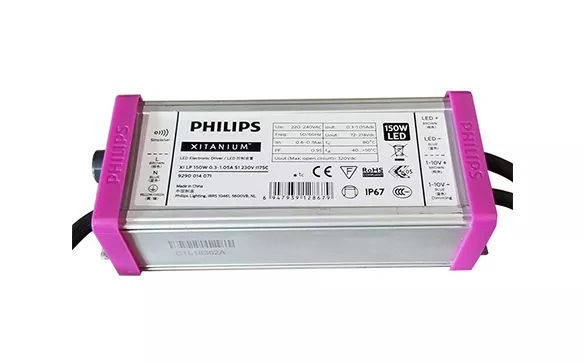
· Use appropriate fixtures and ballasts: Metal halide lamps must operate in compatible fixtures and with suitable ballasts. Fixtures should provide adequate ventilation and cooling to prevent overheating and thermal stress. Ballasts must match the lamp’s voltage, wattage, base type, and operating position, and should include proper grounding and protection against power surges and short circuits.
· Follow manufacturer’s instructions: Install, operate, and replace lamps according to the manufacturer’s guidelines. Instructions typically cover lamp orientation, burning cycle, warm-up and cool-down times, restrike procedures, dimming capability, end-of-life indicators, disposal methods, and warranty terms.
· Avoid frequent switching: Do not switch metal halide lamps on and off frequently or abruptly. Frequent cycling reduces lamp life and can cause flickering. Lamps should operate for at least 10 hours per start (except M1500 and BRITELINE lamps, which are rated for 5 hours per start) to reach their expected lifespan.
· Replace lamps timely: Replace lamps at the end of their life or if signs of deterioration appear, such as reduced light output, color shift, flickering, cycling, or blackening. Timely replacement prevents premature failure or potential damage to the fixture or ballast.
· Dispose of lamps properly: Metal halide lamps contain mercury and other hazardous substances. They should be recycled or disposed of according to local regulations and must not be thrown into regular trash or incinerators.
Conclusion
Metal halide lamps are a type of high-intensity discharge (HID) lamp that produces light via an electric arc through a gaseous mixture of vaporized mercury and metal halides. They offer high luminous efficacy, excellent color rendering, and long lifespan, making them suitable for a wide range of indoor and outdoor applications. Proper fixtures, ballasts, and regular maintenance are essential to ensure safe operation, optimal performance, and longevity.