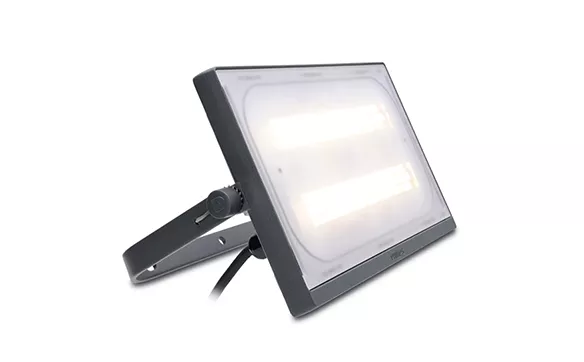
LED floodlights have become one of the most widely used lighting solutions for outdoor areas, commercial properties, industrial facilities, sports grounds, building façades, parking areas, warehouses, and residential spaces. Their popularity is not simply because LEDs are a newer lighting technology. Compared with traditional halogen, incandescent, and many HID floodlights, LED floodlights can provide high light output while consuming less electricity, requiring less maintenance, and offering greater control over how and where light is delivered.
So, what are the benefits of LED floodlights?
The main advantages of LED floodlights include high energy efficiency, long service life, lower maintenance costs, instant illumination, good light distribution, improved outdoor durability, flexible controls, and suitability for a wide range of applications. When the correct wattage, lumen output, beam angle, color temperature, and protection rating are selected, LED floodlights can provide an efficient long-term lighting solution for both small areas and large commercial projects.
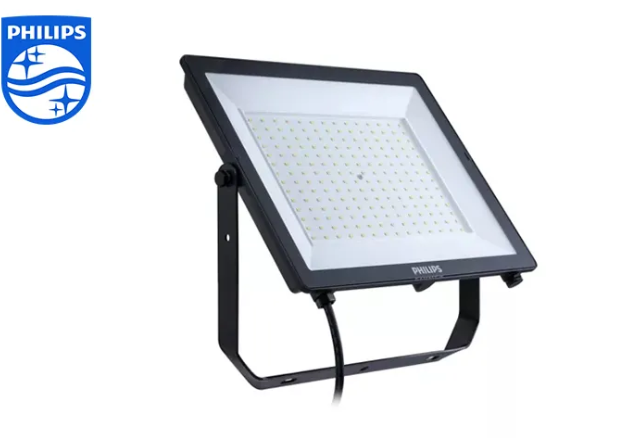
1. LED Floodlights Use Less Energy
Energy efficiency is usually the first reason businesses and property owners consider replacing traditional floodlights with LEDs.
Traditional lighting technologies can consume a significant amount of electricity because part of their input energy is converted into heat rather than useful visible light. LEDs are designed to convert electrical power into usable light more efficiently.
ENERGY STAR states that LED lighting products can produce light up to 90% more efficiently than traditional incandescent bulbs, although the actual energy savings of a complete floodlighting installation depend on fixture design, wattage, optics, controls, and the type of lighting being replaced.
For commercial and industrial installations, it is therefore better to compare fixtures according to lumens and lumens per watt rather than wattage alone.
For example, a facility should not simply ask:
“Should we replace a 400W floodlight with another 400W fixture?”
A more useful question is:
“How many lumens do we need in this area, and how efficiently can the new fixture deliver that light?”
The U.S. Department of Energy uses luminaire efficacy, expressed in lumens per watt, as an important measure of exterior lighting efficiency.
This makes LED floodlights particularly attractive for applications where lights operate for many hours each night, such as:
◆ Factories
◆ Logistics yards
◆ Warehouses
◆ Parking areas
◆ Commercial buildings
◆ Ports
◆ Sports facilities
◆ Construction sites
◆ Public outdoor areas
The longer the operating hours, the greater the potential impact of energy efficiency on total operating costs.
2. LED Floodlights Have a Long Service Life
Another major benefit of LED floodlights is their long operating life.
Conventional lamps usually require periodic replacement after the light source burns out. LEDs behave differently. Rather than suddenly failing in the same way as many traditional lamps, LED light output normally decreases gradually over time.
The U.S. Department of Energy states that good-quality white LED lighting products may have useful lives of approximately 30,000 to 50,000 hours or longer, depending on product quality and operating conditions.
ENERGY STAR also explains that LED lifetime is commonly associated with lumen depreciation—the gradual reduction in light output—rather than simply the point at which the lamp stops operating.
This matters particularly when floodlights are installed in difficult-to-access locations.
Consider floodlights mounted:
Replacing a lamp in these locations may require lifts, scaffolding, maintenance teams, or temporary shutdowns.
A longer-lasting LED fixture can therefore reduce both replacement frequency and the labor associated with maintenance.
3. LED Floodlights Can Reduce Maintenance Costs
The purchase price of a floodlight is only one part of its total cost.
Commercial buyers should also consider:
Total lighting cost = purchase cost + electricity cost + maintenance cost + replacement cost
A cheaper fixture that requires frequent lamp replacements can eventually become more expensive than a higher-quality LED floodlight.
Longer LED service life helps reduce:
◆ Replacement lamp purchases
◆ Maintenance labor
◆ Lift or scaffolding rental
◆ Maintenance downtime
◆ Electrical service calls
◆ Disruption to production or business operations
This advantage becomes increasingly important as the number of installed fixtures increases.
Changing one floodlight beside a house is relatively simple. Maintaining hundreds of floodlights across an industrial plant, distribution center, airport, or sports facility is a completely different problem.
For large projects, reduced maintenance can therefore be nearly as important as lower electricity consumption.
4. LED Floodlights Provide Instant Full Brightness
LED floodlights normally reach useful brightness immediately after being switched on.
There is no long warm-up period.
This is especially valuable for:
Older HID technologies such as some metal-halide lamps may require time to reach full output and can also need a restrike period after being switched off.
LED floodlights are much better suited to applications where lighting needs to respond immediately.
Instant-on capability also makes LEDs compatible with occupancy sensors and intelligent lighting controls.
Instead of leaving floodlights running continuously, a facility can reduce light levels or turn lights off when areas are unused and restore illumination immediately when vehicles or workers enter the area.
The Department of Energy notes that exterior LED lighting combined with advanced controls can further reduce energy and operating costs.
5. LED Floodlights Can Deliver Bright, Controlled Illumination
A common misconception is that higher wattage automatically means better lighting.
It does not.
Good floodlighting depends on several factors:
LEDs are directional light sources, meaning their light can be controlled and directed more effectively than technologies that radiate light in many directions. ENERGY STAR identifies directional light output as one of the important characteristics differentiating LEDs from traditional incandescent and fluorescent lighting.
For floodlighting, this allows manufacturers to combine LED chips with lenses and reflectors designed for particular beam distributions.
A wide beam may be appropriate for illuminating:
◆ Building surroundings
◆ Parking areas
◆ Gardens
◆ Large yards
◆ General workspaces
A narrower or more controlled beam may be better for:
Choosing the correct beam angle can improve useful illumination without simply increasing wattage.
6. LED Floodlights Improve Visibility and Safety
Outdoor lighting is frequently installed for safety rather than decoration.
Dark areas around factories, warehouses, parking lots, pedestrian routes, loading bays, and building entrances can make it difficult for workers, drivers, visitors, or security cameras to see hazards.
Properly designed LED floodlighting can improve visibility around:
◆ Stairs
◆ Loading docks
◆ Equipment
◆ Roads
◆ Parking spaces
◆ Building entrances
◆ Walkways
◆ Construction areas
◆ Storage yards
LEDVANCE identifies outdoor safety, construction-site illumination, sports lighting, and large-area visibility among common floodlight applications.
However, simply installing the brightest possible light is not necessarily safer.
Poorly positioned floodlights can create excessive glare, strong shadows, or uneven illumination.
For safety-critical commercial projects, the objective should therefore be appropriate and uniform illumination, not maximum brightness.
7. LED Floodlights Are Well Suited to Outdoor Environments
Floodlights are frequently exposed to harsh environmental conditions.
Depending on the installation location, a fixture may encounter:
Outdoor LED floodlights are therefore commonly manufactured with sealed housings and weather-resistant construction.
For outdoor projects, buyers should pay particular attention to the fixture's IP rating.
For example, an IP65 or IP66-rated luminaire may be suitable for many outdoor lighting environments, although the correct rating depends on the actual installation conditions.
Philips' professional LED floodlighting literature, for example, highlights robust housings, IP66 protection, energy savings, uniform illumination, and reduced maintenance among important floodlight characteristics.
For coastal, port, chemical, or heavy-industrial applications, IP protection alone may not be sufficient.
Buyers may also need to consider:
◆ Anti-corrosion coating
◆ Salt-spray resistance
◆ Impact resistance
◆ Surge protection
◆ Operating temperature
◆ Housing material
◆ Driver protection
◆ Mounting strength
This is why commercial floodlight selection should be based on the actual environment rather than wattage alone.
8. LEDs Produce Less Wasted Heat Than Traditional Lighting
LEDs are highly efficient, but this does not mean they produce no heat.
They still generate heat, and proper thermal management is essential to long-term performance.
Unlike incandescent lighting, however, LEDs do not rely on heating a filament to produce light. A larger proportion of their electrical input can therefore be converted into useful illumination rather than radiant heat.
ENERGY STAR explains that LED fixtures use heat sinks to transfer heat away from the LED, and that effective thermal management is one of the most important factors influencing LED performance and service life.
For buyers, this highlights an important lesson:
Do not judge an LED floodlight only by its LED chip specification.
The heat sink, housing design, driver, PCB, seals, and overall thermal structure can have a major effect on long-term reliability.
9. LED Floodlights Work Well with Smart Lighting Controls
One of the advantages of LED technology is controllability.
Depending on the fixture and lighting system, LED floodlights may support:
This allows lighting to respond to actual operating conditions.
For example, a logistics yard may not need 100% light output throughout the entire night.
A control system could:
1. Reduce lighting during low-activity periods.
2. Detect an approaching vehicle.
3. Increase illumination in the relevant zone.
4. Return to a lower level afterward.
This can reduce unnecessary electricity use while preserving safety.
The Department of Energy specifically identifies networked controls and activity-responsive lighting as methods for further improving the energy performance of exterior LED systems.
10. LED Floodlights Are Available in Many Configurations
LED floodlights are not limited to one type of application.
They are available in a broad range of:
◆ Wattages
◆ Lumen outputs
◆ Beam angles
◆ Color temperatures
◆ Sizes
◆ Mounting methods
◆ Housing designs
◆ Control options
◆ IP ratings
This makes them suitable for both relatively small outdoor spaces and large professional lighting installations.
Common applications include:
Security Lighting
Floodlights can illuminate entrances, fences, parking areas, driveways, and building perimeters.
Industrial Lighting
Factories and warehouses can use floodlights for loading areas, outdoor storage yards, access roads, and equipment zones.
Sports Lighting
Higher-output LED floodlights can illuminate football pitches, tennis courts, basketball courts, training grounds, and stadiums.
Construction Lighting
Portable or fixed LED floodlights can provide illumination for construction and maintenance activities at night.
Architectural Lighting
Controlled floodlighting can highlight façades, monuments, signs, landscaping, and architectural features.
Parking and Area Lighting
Wide-beam LED floodlights can provide general illumination across parking areas and other outdoor spaces.
LED Floodlights vs Traditional Floodlights
The differences become easier to understand when the technologies are compared directly.
| Feature | LED Floodlights | Traditional Halogen/HID Floodlights |
|---|
| Energy efficiency | High | Generally lower |
| Service life | Long | Usually shorter |
| Start-up | Instant | Some technologies require warm-up |
| Maintenance frequency | Lower | Usually higher |
| Light control | Highly flexible | More limited |
| Smart controls | Well suited | May be less flexible |
| Heat generation | Lower wasted radiant heat | Often higher |
| Outdoor options | Widely available | Widely available |
| Upfront cost | Can be higher | Sometimes lower |
| Long-term operating cost | Often lower | Often higher |
The actual savings will vary according to operating hours, electricity prices, fixture efficiency, maintenance requirements, and the type of legacy lighting being replaced.
For this reason, buyers should compare lifetime operating cost rather than purchase price alone.
How to Choose the Right LED Floodlight
The advantages of LED technology can only be fully realized when the correct fixture is selected.
Before purchasing LED floodlights, consider the following factors.
Required Lumen Output
Do not choose a floodlight based solely on watts.
Determine how much usable light the application requires.
Lumens per Watt
Higher efficacy means the fixture can produce more light for each watt of electricity consumed.
Beam Angle
Choose the beam according to the size, shape, and distance of the target area.
Color Temperature
Common LED floodlight color temperatures include warm white, neutral white, and cool white.
The right choice depends on the application and desired visual environment.
Color Rendering
CRI can matter where accurate identification of colors is important, such as commercial areas, sports facilities, security-camera zones, workshops, and architectural lighting.
IP Rating
For outdoor use, choose an appropriate dust and water protection level.
Surge Protection
Outdoor and industrial electrical systems can experience voltage surges. Appropriate surge protection can help protect the LED driver and electronics.
Heat Dissipation
Evaluate housing construction and thermal design, particularly for high-power floodlights.
Operating Temperature
Extreme hot or cold environments may require specially designed fixtures.
Controls
Consider whether sensors, dimming, photocells, timers, DALI, DMX, or another control protocol will be required.
Warranty and Testing
For commercial projects, product testing, photometric data, certifications, warranty terms, and manufacturer support can be just as important as the headline wattage.
Are LED Floodlights Worth It?
For many outdoor, commercial, and industrial lighting applications, LED floodlights can provide a strong combination of efficiency, durability, lighting performance, and reduced maintenance.
Their main value becomes particularly clear in locations where lights:
◆ Operate for many hours
◆ Are difficult to access
◆ Need instant illumination
◆ Require controlled light distribution
◆ Are exposed to outdoor conditions
◆ Need to integrate with sensors or lighting controls
The initial purchase price of a quality LED floodlight may sometimes be higher than that of a basic traditional fixture, but purchase price alone does not show the total economic picture.
Electricity consumption, maintenance frequency, replacement labor, expected operating life, and lighting performance should all be considered.
Frequently Asked Questions About LED Floodlights
Do LED Floodlights Save Electricity?
Yes. LED floodlights can use substantially less electricity than many traditional floodlighting technologies when fixtures with appropriate lumen output and optical performance are selected. The exact percentage of savings depends on the old fixture, new fixture, operating hours, and lighting design.
How Long Do LED Floodlights Last?
Quality LED lighting products are commonly rated for tens of thousands of operating hours. The U.S. Department of Energy notes that good-quality white LED products may achieve approximately 30,000 to 50,000 hours or more. Actual lifespan depends on temperature, driver quality, thermal management, environment, operating conditions, and fixture design.
Are LED Floodlights Good for Outdoor Use?
Yes, provided the fixture has been designed for the environment in which it will be installed. Buyers should check IP rating, operating temperature, corrosion resistance, housing material, surge protection, and other environmental requirements.
Are LED Floodlights Good for Security Lighting?
Yes. Their instant illumination, high lumen output, directional optics, and compatibility with motion sensors make LED floodlights suitable for many security applications.
Do LED Floodlights Need Time to Warm Up?
No. One of the major advantages of LED floodlights is instant-on operation. They can reach useful brightness immediately after switching on.
What Wattage LED Floodlight Do I Need?
There is no single wattage suitable for every project.
Instead of beginning with wattage, consider:
◆ Area dimensions
◆ Required illuminance
◆ Mounting height
◆ Lumen output
◆ Beam angle
◆ Fixture spacing
◆ Application type
For professional commercial or industrial projects, a photometric lighting design can help determine suitable fixture quantities and mounting positions.
Are More Lumens Always Better?
No.
A floodlight producing more lumens is not automatically better if much of that light goes outside the target area or creates excessive glare.
Good lighting design focuses on delivering the right amount of light to the right place.
Conclusion
The benefits of LED floodlights go far beyond lower electricity consumption. They combine energy efficiency, long service life, reduced maintenance, instant illumination, controllable light distribution, outdoor durability, and compatibility with intelligent lighting systems.
For homes, commercial buildings, factories, warehouses, sports facilities, construction sites, parking areas, and other outdoor environments, these characteristics can make LED floodlights a practical alternative to older halogen and HID lighting technologies.
However, not every LED floodlight provides the same performance.
For the best results, buyers should evaluate lumens, lumens per watt, beam angle, IP rating, thermal design, surge protection, color temperature, controls, certifications, and installation environment rather than making a decision based only on wattage or purchase price.
The right LED floodlight is not necessarily the most powerful one. It is the fixture that delivers the required illumination efficiently, reliably, and consistently throughout its expected operating life.