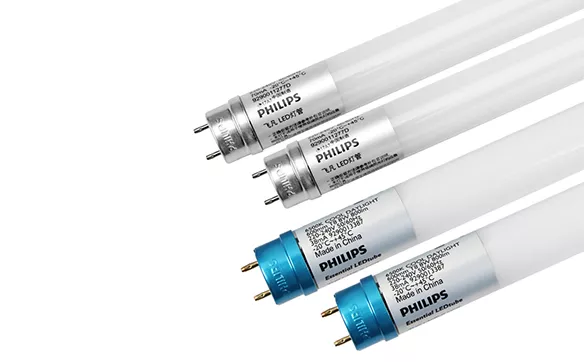
Replacing fluorescent tube lights with LED retrofits can be a confusing and challenging process. This guide explains the key considerations involved in replacing fluorescent tubes with LED tube lights.
1. Advantages of LED Tubes Over Fluorescent Tubes
The advantages of LED tubes over fluorescent tubes have been widely discussed. The three primary benefits are:
◆ Higher efficiency and energy savings: Reduce energy consumption by up to 30–50%.
◆ Longer lifespan: Typically lasts around 50,000 hours.
◆ Mercury-free: Contains no mercury.
2. Fluorescent Tube Sizes and LED Tube Light Retrofitting
Because fluorescent fixtures are often installed in ceilings and connected directly to the mains electricity supply, replacing the entire fixture can be relatively expensive and difficult.
As a result, it is often more economical to retain the existing fluorescent fixture and replace only the fluorescent tube with an LED tube light.
To ensure a proper retrofit, it is important to understand the different types of fluorescent tubes available and select a compatible LED replacement.
Over the years, fluorescent tube manufacturers have developed a wide range of sizes and types, including the following:
◆ T8 4-ft: Four-foot T8 fluorescent lamps are among the most commonly used types today. They measure 48 inches in length and have a lamp diameter of 1 inch.
◆ T12 4-ft: Four-foot T12 fluorescent lamps are less energy-efficient than T8 lamps. They have the same length as T8 lamps but a larger diameter of 1.5 inches.
◆ T5 4-ft: Four-foot T5 fluorescent lamps are generally among the most energy-efficient fluorescent options and were among the newer lamp types introduced in the United States during the 2000s. They are commonly designated as T5HO (high output) and provide greater brightness than their T8 counterparts. T5 lamps are slightly shorter than four feet, measuring approximately 45.8 inches. They are also available in various lengths, including 1-ft, 2-ft, and 3-ft versions, and are commonly used in non-ceiling fixtures such as table lamps.
T8 and T12 fluorescent tubes are also available in other lengths, including 8-ft versions, although 4-ft tubes remain the most common.
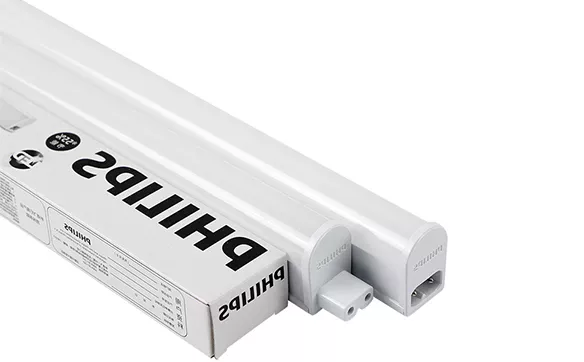
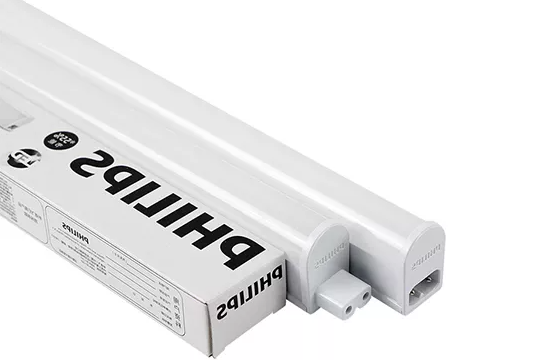
LED tube lights are designed to replicate the mechanical dimensions of fluorescent tubes, allowing them to serve as retrofit replacements. They also use the same form-factor designations, such as 4-foot T8 LED tube lights.
T8 and T12 fixtures generally have the same length and use the same pin configuration, making them mechanically cross-compatible in many cases.
However, T5 fixtures are not cross-compatible with T8 and T12 lamps because they have different pin sizes and physical lengths.
3. Fluorescent Ballasts and LED Tube Light Retrofitting
All fluorescent tube lights use a device called a ballast to regulate the electrical current supplied to the lamp during operation. Ballasts are essential for fluorescent lamps, unlike incandescent lamps, which can be connected directly to mains electrical circuits.
Fluorescent lamp fixtures typically house the ballast inside the fixture, making it inaccessible without removing the fixture from the ceiling. Any modifications to the fluorescent ballast should be carried out only by individuals with the necessary electrical knowledge and experience.
T5, T8, and T12 fluorescent lamps operate slightly differently and therefore use different types of fluorescent ballasts.
LED lamps, on the other hand, operate differently from fluorescent lamps and do not use a ballast. Instead, they rely on electronic components incorporated into the LED driver.
Early LED tube lights required the fluorescent ballast to be removed or bypassed during installation. Today, many LED tube lights are designed to be compatible with existing fluorescent ballasts, allowing the fluorescent tube to be replaced without rewiring the fixture. Below, we explain the common terms used to describe each of these configurations.
3A) UL Type A LED Tube Light – Ballast Compatible
Commonly referred to as UL Type A LED tube lights, these lamps are designed to work with compatible fluorescent ballasts. They are the easiest to install because the existing fluorescent fixture does not need to be rewired.
UL Type A LED tube lights function similarly to fluorescent lamps and can be installed as a direct replacement when ballast compatibility is confirmed.
Ideal for: Users who are uncomfortable with electrical wiring or prefer to avoid wiring work, as well as lighting installations where electrician labor costs are high.
Disadvantages: Fluorescent ballasts can fail, resulting in ongoing maintenance and eventual ballast replacement or bypass. Compatibility issues may arise with certain fluorescent ballasts, and the ballast can reduce overall electrical efficiency.
3B) UL Type B LED Tube Light – Ballast Bypass
LED tube lights with a UL Type B specification are designed to operate without a fluorescent ballast. The ballast must be bypassed or removed, and the tube must be connected directly to mains electricity according to the manufacturer's wiring instructions. The LED driver is integrated into the LED tube itself.
UL Type B LED tubes can be further categorized into single-ended and double-ended configurations.
In a single-ended configuration, only the two pins at one end of the tube are used: one pin connects to the live wire, and the other connects to neutral. The two pins at the opposite end are not electrically functional and serve only to hold the lamp in place.
For single-ended configurations, the installation direction is important. Incorrect wiring can prevent the lamp from illuminating and may create an electric shock or fire hazard. These tubes typically have a label at one end marked "AC INPUT" or similar. Some single-ended models may accept power from either end, depending on the manufacturer's design.
In a double-ended configuration, the pins at one end of the tube connect to live, while the pins at the opposite end connect to neutral. The lampholders must be wired accordingly, following the manufacturer's instructions.
Ideal for: Installations where electrical rewiring is feasible and improved energy efficiency and reduced maintenance costs are priorities.
Disadvantages: Installation requires knowledge of fixture wiring and electrical safety. Ballast bypass and rewiring should be performed by a qualified electrician in accordance with the manufacturer's instructions and applicable electrical codes.
3C) UL Type C LED Tube Light – Remote Driver
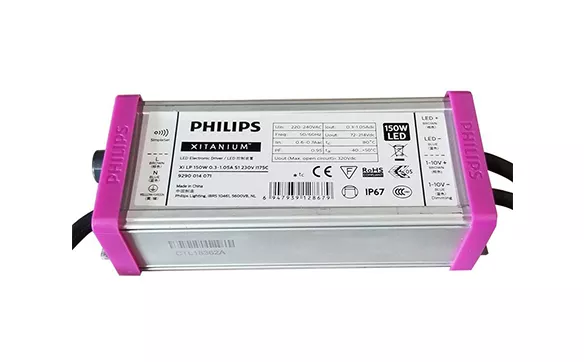
UL Type C LED tubes are relatively uncommon but offer a high degree of flexibility and efficiency for lighting systems. Unlike UL Type B LED tubes, they do not have an integrated LED driver. Instead, a separate LED driver is installed between the LED tube and the mains electricity supply.
Ideal for: Minimizing maintenance costs, as the LED driver can be replaced without replacing the entire LED tube. Type C systems also support a wider range of LED driver options, including 0–10V dimming and other IoT connectivity features.
Disadvantages: Installation requires more electrical work because the existing fluorescent ballast must be removed and replaced with an LED driver.
3D) Shunted vs. Non-Shunted Tombstones
Tombstones are the sockets or lampholders into which LED tube lights are installed. They provide both mechanical support and electrical connections for the lamps.
Tombstones have two electrical contacts corresponding to the two pins on a fluorescent or LED tube light. These contacts may be configured in one of three ways:
1. Neither contact is connected to an electrical source.
2. One contact is connected to live, while the other is connected to neutral.
3. Both contacts are connected to the same electrical polarity, either live or neutral.
Configuration ii) is known as non-shunted, while configuration iii) is known as shunted. Shunting refers to joining two separate electrical contacts into a single circuit, resulting in both tombstone contacts sharing the same electrical polarity.
In general, fluorescent fixtures that have never been modified for LED lighting or instant-start ballasts typically have non-shunted tombstones. Fixtures modified for LED lighting or instant-start ballasts may have shunted tombstones.
Some tombstones are externally shunted, as shown in the reference image, with wire inputs available on only one side. Others are internally shunted, meaning the wire inputs on both sides are accessible but connected internally within the tombstone.
Because some tombstones are internally shunted, visual inspection alone cannot conclusively determine their configuration. We strongly recommend testing the two tombstone contacts with a voltmeter to determine whether an open or closed circuit exists. A closed circuit indicates shunted tombstones.
Important: Before testing or modifying tombstones, disconnect power and follow appropriate electrical safety procedures. Verify the configuration and wiring requirements against the LED tube manufacturer's instructions.
3E) Determine Whether Your LED Tube Light Is Compatible with Shunted or Non-Shunted Tombstones
If your LED tube light uses a single-ended configuration, it is not compatible with shunted tombstones. Single-ended LED tubes require the two contacts at the powered end to connect separately to live and neutral. However, shunted tombstones connect both contacts to the same electrical polarity, which can create a short circuit when wired incorrectly.
If your fixture has shunted tombstones, you will need to rewire or replace them as necessary to match the single-ended LED tube manufacturer's wiring diagram.
If your LED tube light uses a double-ended configuration, it may be compatible with both shunted and non-shunted tombstones, depending on the tube's design and the fixture wiring. Double-ended LED tubes typically receive live through the pins at one end and neutral through the pins at the opposite end, so compatibility depends on how the tombstones and fixture are wired.
Keep in mind that this section addresses whether the tombstones themselves are shunted or non-shunted. Regardless of the configuration, ensure that all wiring connections match the LED tube manufacturer's wiring diagram and follow applicable electrical safety requirements for safe installation.
4. Photometric Specifications for LED Tube Lights: Color Temperature (CCT), Lumens, and CRI
When selecting LED tube lights, it is important to consider their core photometric specifications and ensure that the quality of the emitted light matches or exceeds that of your existing fluorescent tube lighting.
Correlated Color Temperature (CCT)
Most fluorescent tube lights have a correlated color temperature (CCT) of 4000K or 5000K, which are commonly considered suitable for retail and office environments, respectively. However, advances in fluorescent lamp phosphor technology over the years have made a wider range of color temperatures available.
Similarly, LED tube lights are available in a wide range of color temperatures. Generally, an LED tube light and a fluorescent tube light with the same CCT rating will produce a similar appearance of light.
Luminous Flux
Luminous flux, measured in lumens, represents the total amount of visible light emitted by a lamp and is a useful measure for comparing lamp brightness.
For a more direct comparison, compare the luminous flux ratings of the fluorescent lamp and the LED tube light. Generally, a 35W T8 fluorescent lamp produces approximately 2,500 lumens.
One important difference is that LED tube lights typically direct light downward rather than emitting it across a full 360-degree range like fluorescent lamps. As a result, an LED tube light installed in a ceiling fixture may deliver more useful light to the area below because less light is directed back into the fixture.
Color Rendering Index (CRI)
The Color Rendering Index (CRI) measures how accurately colors appear under a light source compared with a reference light source. Most fluorescent lamps have a CRI rating of around 80, and many LED tube lights also have a CRI of approximately 80.
A CRI of 80 is acceptable for most applications. However, for enhanced color quality or environments where accurate color perception is important, consider LED tube lights with a higher CRI rating.
5. LED Tube Light Costs and Financing
Finally, it is important to consider the costs involved in purchasing LED tube lights. In recent years, LED tube prices have decreased to levels that compete with fluorescent lamps, making LED tube lights an increasingly attractive option.
However, if you choose an LED tube light that is not UL Type A, you may incur additional labor costs for electrical rewiring. For large-scale or commercial installations, these costs can be significant, depending on the complexity of the modifications required for the existing fluorescent fixtures. Typically, a trained electrician may need 15–25 minutes to modify each four-lamp fluorescent fixture.
Calculate the potential electricity and maintenance savings from switching to LED tube lights, then determine the payback period. Generally, a shorter payback period is preferable.
You should also consider the manufacturer's warranty terms. Ideally, the payback period should be shorter than the warranty period, helping protect your investment against premature product failures that could undermine the expected cost savings of switching to LED tube lights.