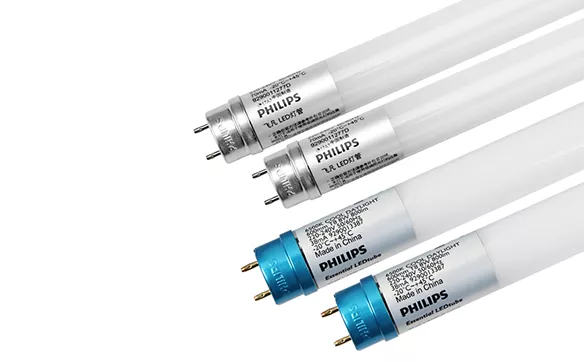
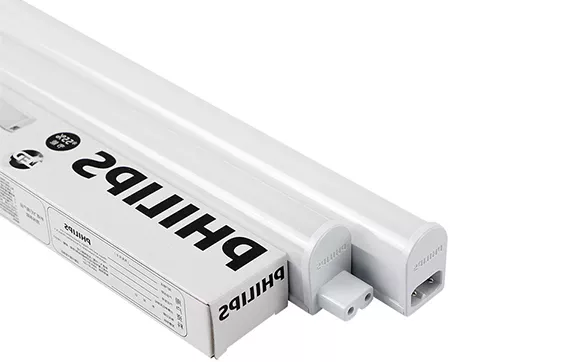
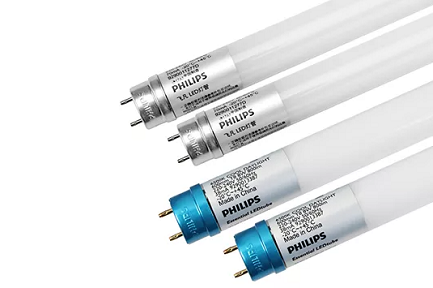
LED tube lights have become one of the most practical upgrades from fluorescent lighting. They are long, linear lamps designed to work in traditional tube-light fixtures, and the most common format is the 4-foot T8 LED tube. In tube naming, the “T” number refers to the diameter in eighths of an inch, so a T8 is 1 inch in diameter. LED tube lights are available in multiple sizes and lengths, from compact 1-foot options to larger 8-foot versions.
Why LED Tube Lights Are So Popular
The main reason people switch to LED tube lights is simple: they solve many of the problems associated with fluorescent lamps. LED tubes can deliver substantial energy savings, often use far less power, and can last much longer when properly designed. They also avoid toxic materials like mercury, and high-quality options can offer better color quality and lower flicker than older fluorescent systems.
The First Thing to Check: Compatibility
Before replacing a fluorescent tube with an LED tube, it is important to separate two questions: physical compatibility and electrical compatibility. A lamp may fit the fixture physically, but still not be safe or usable electrically. For example, T8 and T12 lamps often share the same G13 bipin base, which means they can physically fit in each other’s fixtures if the length matches. That does not automatically mean the wiring is compatible, though.
Common Wiring Methods for LED Tube Lights
LED tube lights are made for different wiring styles. In a ballast-compatible setup, the fluorescent ballast stays in the circuit and no rewiring is needed; this is often called UL Type A or plug-and-play. In a direct-wire single-ended setup, line voltage is fed to one end of the lamp only, which is also known as UL Type B or direct-drive. Some models are designed for direct-wire double-ended wiring, where live and neutral are connected to opposite ends of the tube. Because fixture modification can be complex, it should only be done by qualified people.
Choosing the Right Color Temperature
LED tube lights are usually sold in cooler white color temperatures than residential bulbs. Common choices include 4000K, 5000K, and 6500K. The source page describes 4000K as the warmest common option for tube lights, 5000K as a neutral daylight-like white often used in color-critical spaces, and 6500K as a bluish daylight tone suited to studios and screen-based work.
CRI Matters More Than Many People Think
Color temperature tells you how warm or cool a light appears, but CRI tells you how accurately colors are rendered. Lower-CRI lamps can make colors look dull or distorted, while high-CRI LED tubes help objects appear more natural. The page notes that 80 CRI may be acceptable for storage or parking areas, 90 CRI or higher is better for retail and industrial settings, and 95 CRI or higher is often needed for color-critical applications like studios or inspection stations.
Final Takeaway
If you are upgrading from fluorescent lighting, LED tube lights offer a strong mix of efficiency, longevity, and visual performance. The key is to match the right tube size, verify fixture compatibility, understand the wiring method, and choose the right color temperature and CRI for the space. Done correctly, the switch can improve both lighting quality and operating cost.