News

Home - News - How to Choose LED Street Lights?

How to Choose LED Street Lights?

May. 13, 2026

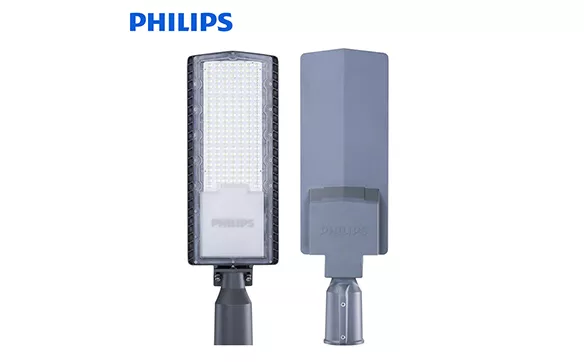
Compared with traditional lighting technologies, LED street lights offer higher energy efficiency, longer service life, lower maintenance costs, and better lighting performance. For more information about LED street lights and common technical questions, please continue reading below.


LED Chips

LED chips are the core light-emitting components of LED street lights. They determine the brightness, efficiency, and overall performance of the lighting system. High-quality LED chips ensure stable output, longer lifespan, and better energy efficiency for outdoor applications.


Lens / Optics

PHILIPS LED street lights offer a wide range of optical light distribution options suitable for architectural lighting, roadway lighting, and area lighting applications. These optical designs help achieve better light uniformity and improve overall lighting performance.

If there are special requirements for light distribution, customization is also available upon request to meet different project conditions.


CCT (Correlated Color Temperature)

CCT refers to the measure used to describe the color appearance of an LED light source. It indicates whether the light appears more yellow, neutral white, or blue-white. CCT is measured in Kelvin (K).

Typical LED street light color temperatures include:


CRI (Color Rendering Index)

CRI represents the ability of a light source to accurately reproduce the colors of illuminated objects. The maximum CRI value is 100, which represents natural daylight.

For LED street lighting applications, a CRI of around 70 is generally sufficient. An option of CRI 80 is also available, providing more natural and realistic color rendering. In indoor lighting applications, CRI 80 is typically considered the minimum standard, with higher values preferred for better visual comfort and color accuracy.
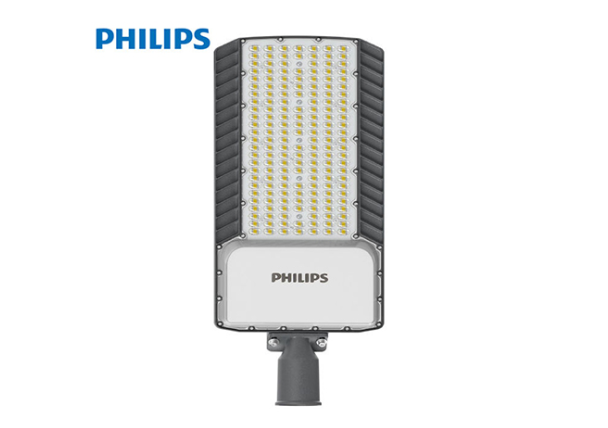

image.png


What to Know about LED Street Lights


Why are LED street lamps adopted in smart cities?

The concept of smart cities is becoming increasingly accepted as a way to create more livable and sustainable urban environments. It focuses on using emerging technologies to improve infrastructure efficiency while reducing environmental impact.

Street lighting is a fundamental part of urban infrastructure and plays an important role in smart city systems. LED street lighting provides a strong foundation for building connected, efficient, and safe urban lighting networks.

Because of their high energy efficiency and long service life, LED street lighting systems deliver immediate benefits to smart cities. They are widely recognized as a sustainable lighting solution that helps reduce carbon emissions and environmental impact, making them an important component in the development of greener cities.


What are the Advantages of switching to LED street lamps?

Less toxicity and better lighting
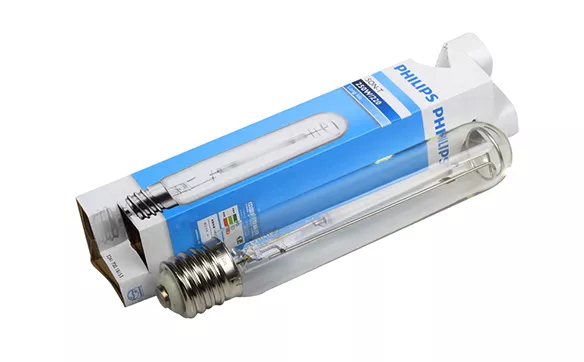
Smart cities prioritize human health and sustainability, including improved air quality, reduced congestion, and better public safety. Unlike traditional high-pressure sodium lamps, LED lights do not contain toxic mercury or other harmful substances. They also turn on instantly and do not emit ultraviolet light that attracts insects.

LED technology continues to improve in luminous efficiency, color quality, optical design, and thermal management. It produces a more daylight-like environment, improving nighttime visibility and making public transport and pedestrian areas safer and more comfortable.

Economic benefits

LED lighting systems are highly energy-efficient and cost-effective. Compared with traditional lighting, they can reduce street lighting energy consumption by 50–70%. In addition, LED street lights typically have a long service life of up to 20 years and offer strong controllability.

These advantages significantly reduce operating and maintenance costs, meaning the investment can be recovered through energy savings over time. Therefore, switching to LED lighting is a practical choice for cities aiming to become smarter and more efficient.

Environmental benefits

LEDs consume less energy and generate minimal heat, making them a more environmentally friendly lighting option. Compared with traditional fluorescent lighting, LEDs are significantly more efficient and are widely considered a standard for green lighting.

Their long lifespan also reduces waste from lamp replacement, lowering landfill impact and disposal costs, which ultimately reduces the overall carbon footprint.


How to choose LED street lamps in rural areas?

In rural areas, it is often difficult to determine appropriate specifications such as pole height and lamp power, as these require professional lighting knowledge.

Lighting time considerations

If the lighting duration is long, high-power LED street lamps may not always be suitable. Extended operation generates more heat, and insufficient heat dissipation under long working hours may affect lamp lifespan. Therefore, lighting duration should always be considered when selecting power.

Pole height selection

Different pole heights match different LED power levels. Generally, higher poles require higher wattage. In rural applications, pole heights are usually between 5m and 8m, and suitable LED power ranges from 20W to 90W.

Road width considerations

Road width directly affects pole height, and pole height affects lamp power selection. Lighting design should be based on actual road width rather than selecting high power blindly. Oversized lighting may cause glare and discomfort for pedestrians, so proper matching is important.

Conclusion for rural roads

Rural roads are typically 4–8 meters wide. Based on the above factors, the recommended pole height is 5m or 6m, and the commonly used LED power is 20W–30W, which is generally the most suitable range for rural street lighting applications.


What factors affect the brightness of LED street lamps?

LED power

Higher LED power generally means more LED chips inside the fixture, resulting in higher potential brightness.

If two lights have the same chip brightness, the one with more chips can produce higher overall luminous output.

Luminous efficacy of LED chips

The brightness of the entire fixture depends largely on the efficiency of the LED chips. At the same power level, higher luminous efficacy results in brighter lighting.

Heat dissipation

Heat dissipation has a significant impact on brightness. Good thermal management ensures stable current and consistent light output. Poor heat dissipation leads to high internal temperature, accelerating light decay and reducing brightness over time.

Series and parallel configuration

The internal wiring structure of LED chips affects current distribution. A higher parallel configuration can improve brightness, while poor configuration may reduce light output efficiency.

LED driver and chip quality

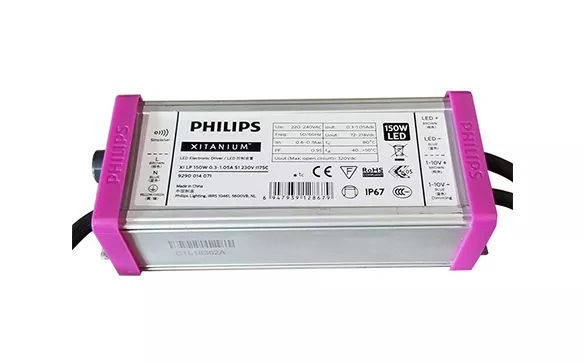
High-quality LED drivers and chips from reputable manufacturers provide better stability, efficiency, and brightness performance compared to low-quality components.


How tall is a street light?

Street light height varies depending on road type, lighting area, spacing, and illumination requirements. Generally, street light poles range from 2.4 m to 15.2 m (8–50 feet).

  • ·   2.4–3.6 m: yards and park lighting

  • ·   4–12 m: general road lighting

  • ·   Above 12 m: high mast lighting for large intersections, roundabouts, and wide areas


How do I calculate the appropriate wattage for an LED street light?

The appropriate wattage depends on road width, pole height, pole spacing, and lighting standards such as EN 13201 or IES RP-8.

As a general reference:

  • ·   6 m poles: 40W–60W

  • ·   8 m poles: 80W–100W

Final wattage should be confirmed through professional lighting simulation.


What is the lifespan of an LED street light?

High-quality LED street lights typically last 50,000–100,000 hours. However, actual lifespan depends on heat dissipation design, driver quality, and ambient temperature.


Why do some LED street lights dim after a few years?

Light decay is usually caused by poor heat dissipation or aging of driver components such as capacitors. Proper thermal design and high-quality drivers help reduce lumen degradation and extend lifespan.


Why do prices vary so much between different LED street light brands?

Main differences include:

  • ·   LED chip brands (e.g., premium vs low-cost chips)

  • ·   LED driver quality and efficiency

  • ·   Housing material and structure (die-cast aluminum vs lower-grade materials)


Are LED street lights expensive to maintain?

LED street lights require much less maintenance than traditional lamps. However, periodic cleaning of the lens and heat sink is recommended to maintain performance and prevent overheating.


How can I avoid glare from LED street lights?

  • ·   Use anti-glare optical design fixtures

  • ·   Adjust mounting angle properly (often close to 0° tilt for compliance)

  • ·   Optimize lens design or use indirect lighting solutions


How long can a solar LED street light operate on rainy days?

It depends on battery capacity and system configuration. Typically, solar LED street lights can operate for 3–5 days under rainy conditions when equipped with smart energy-saving modes.


Related Products
wechat
wechat