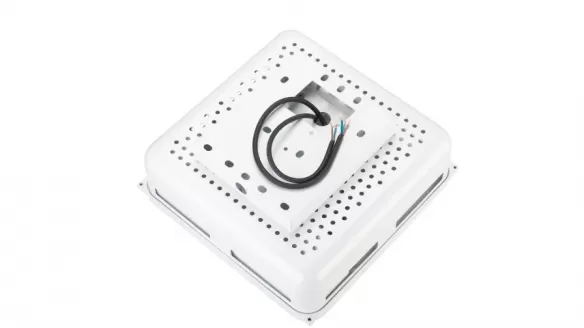
Panel lighting is widely used to provide broad, uniform illumination in offices, schools, hospitals, retail stores, homes, and other indoor spaces. However, the term does not describe one single fixture. Panel lights can be classified by their light-emitting structure, installation method, size, shape, optical performance, and control functions.
Most modern panel lights use LEDs because they can produce high light output from a relatively slim fixture. Within this category, the main choices include edge-lit and back-lit panels, as well as recessed, surface-mounted, and suspended models. Some products also add dimming, selectable color temperature, emergency backup, low-glare optics, or smart controls.
Understanding these differences helps you choose a fixture that fits the ceiling, provides the required visual comfort, and works with the building's electrical and lighting-control system. This guide explains the most common types of panel lighting and answers the questions buyers frequently ask.
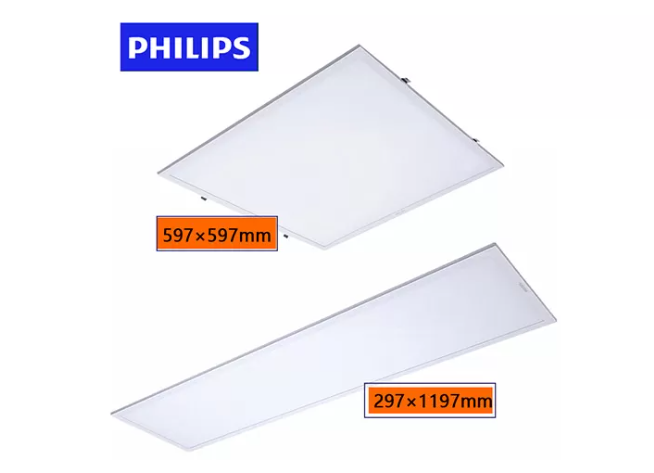
Main Types of Panel Lighting at a Glance
The table below compares the major categories. Some terms describe how the fixture produces light, while others describe how it is installed or controlled. A single product can therefore belong to several categories—for example, it may be a back-lit, recessed, dimmable 600 × 600 mm LED panel.
| Panel light type | Defining feature | Main advantages | Typical applications | Important consideration |
|---|
| Edge-lit LED panel | LEDs are positioned around the edges and shine into a light-guide plate | Very slim profile and even luminous surface | Offices, meeting rooms, hotels, reception areas | Light-guide plate quality and long-term uniformity |
| Back-lit LED panel | LEDs are arranged behind the diffuser | Direct optical path, efficient construction, no light-guide plate | Schools, offices, hospitals, commercial buildings | Fixture depth and diffuser design |
| Recessed panel | Fits into or above the ceiling plane | Clean, flush appearance | Modular ceilings, offices, classrooms | Ceiling grid or cutout dimensions |
| Surface-mounted panel | Attaches directly below a solid ceiling | Suitable where no ceiling void is available | Corridors, apartments, shops, concrete ceilings | Mounting frame depth and cable entry |
| Suspended panel | Hangs from cables or rods | Adjustable mounting height and architectural appearance | High ceilings, studios, open offices | Suspension length, stability, and glare |
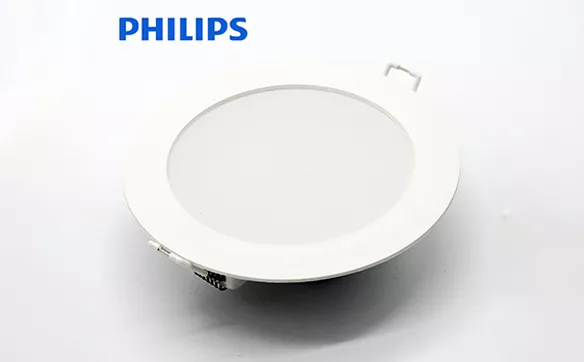
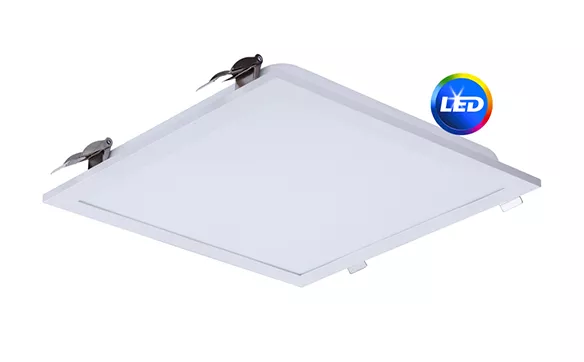
| Round or square slim panel | Compact geometric fixture, often spring-mounted | Flexible for small rooms and circulation areas | Homes, hotels, hallways, utility rooms | Cutout size and driver clearance |
| Low-glare panel | Uses specialized optics, lenses, louvers, or diffusers | Improved visual comfort at desks and screens | Offices, classrooms, control rooms | Verify photometric data rather than relying only on a “low-glare” label |
| Dimmable or tunable-white panel | Output and sometimes color temperature can be adjusted | Flexible scenes, daylight response, and user comfort | Offices, education, healthcare, hospitality | Driver and control-protocol compatibility |
| Emergency panel | Includes or connects to emergency power components | Provides reduced output during a power failure | Escape routes and code-regulated commercial spaces | Required duration, test method, and local regulations |
| Smart panel | Connects to sensors, a network, or an app-based control system | Scheduling, occupancy control, monitoring, and zoning | Smart offices, schools, public buildings | Cybersecurity, interoperability, and commissioning |
1. Edge-Lit LED Panel Lights
In an edge-lit panel, the LEDs are mounted along one or more sides of the frame. Their light travels horizontally into a light-guide plate, which redirects it downward through a diffuser. This construction enables an especially thin fixture.
Edge-lit panels are popular where appearance and depth matter. Their slim body works well in modern offices, hotels, conference rooms, and spaces with limited clearance. A properly designed light-guide plate can create a smooth illuminated surface with few visible bright spots.
The light-guide plate is also a critical component. Its material, printed pattern, resistance to discoloration, and ability to distribute light affect long-term performance. Buyers comparing edge-lit LED panels should therefore look beyond wattage and ask about lumen maintenance, color consistency, driver quality, and the manufacturer's photometric test data.
2. Back-Lit or Direct-Lit LED Panel Lights
Back-lit panels place an array of LEDs behind the diffuser, so the light travels directly out of the fixture instead of passing through a separate light-guide plate. Individual lenses may be used to spread light evenly across the panel.
This simpler optical path can support high system efficiency and removes the light-guide plate as a potential point of aging or yellowing. Back-lit designs are commonly used in schools, hospitals, offices, supermarkets, and other projects that prioritize reliable general lighting.
Back-lit panels are often slightly deeper than very slim edge-lit models, although product designs vary. The distance between the LEDs and diffuser, the lens layout, and thermal management all influence uniformity. Poorly designed products may reveal bright spots, so request an illuminated sample or luminance image when visual quality is important.
Edge-Lit vs. Back-Lit Panels: Which Is Better?
Neither design is automatically better for every project. Choose edge-lit panels when an ultra-thin profile and a smooth luminous appearance are priorities. Choose back-lit panels when you want a direct optical structure, competitive efficiency, and no light-guide plate.
The final decision should be based on tested performance rather than construction alone. Compare delivered lumens, input power, efficacy, glare data, color consistency, flicker behavior, useful life, warranty, and installation depth. Two fixtures using the same architecture can perform very differently.
3. Recessed LED Panel Lights
Recessed panels sit flush with the ceiling. Full-size rectangular or square models are often designed for modular ceiling grids, while smaller slim panels may use spring clips and a circular or square ceiling cutout.
This is one of the most common choices for offices and classrooms because it creates an uncluttered ceiling and distributes ambient light over a wide area. Standard grid-compatible formats can also simplify replacement in renovation projects.
Before ordering, confirm the actual ceiling system rather than relying only on a nominal size. A “600 × 600 mm” panel may have physical dimensions intended for a particular metric grid, while 2 × 2 ft and 2 × 4 ft fixtures are common in North American ceiling systems. Also check the space required for the driver, electrical connections, insulation clearances, and any local fire or building-code provisions.
4. Surface-Mounted LED Panel Lights
Surface-mounted panels are fixed directly to the underside of a ceiling or, in some cases, a wall. They are a practical alternative when a building has a solid concrete ceiling, a shallow ceiling void, or no suspended grid.
The fixture normally uses a surface-mount frame or an integrated housing that accommodates the driver and wiring. It provides the broad appearance of a panel without requiring a large ceiling opening. For retrofits, this may reduce ceiling alteration, although electrical work and secure anchoring are still necessary.
Surface-mounted panels are often chosen for corridors, stair landings, shops, kitchens, utility areas, and residential spaces. Pay attention to the visible depth of the frame, the direction of cable entry, mounting hardware, ceiling load capacity, and access for future driver replacement.
5. Suspended or Pendant Panel Lights
Suspended panels hang below the ceiling on adjustable wires, cables, or rods. They can bring the light source closer to the working plane in a high-ceiling space and give the interior a more architectural look.
They are frequently installed over desks, reception counters, meeting tables, and collaborative areas. Linear panel luminaires are especially suitable for continuous rows or geometric arrangements in open-plan interiors.
Suspension does not automatically solve glare. The fixture's distribution, brightness, mounting height, spacing, and viewing angles still need to be assessed. Some suspended panels provide both downward and upward light. This direct/indirect distribution can brighten the ceiling and reduce contrast, but it requires suitable ceiling reflectance and adequate suspension distance.
6. Panel Lights by Shape and Size
Panel lighting is available in several physical formats:
◆ Square panels: Frequently used in modular ceilings. Common nominal formats include 600 × 600 mm and 2 × 2 ft.
◆ Rectangular panels: Formats such as 300 × 1200 mm, 600 × 1200 mm, 1 × 4 ft, and 2 × 4 ft suit corridors, long rooms, and conventional ceiling grids.
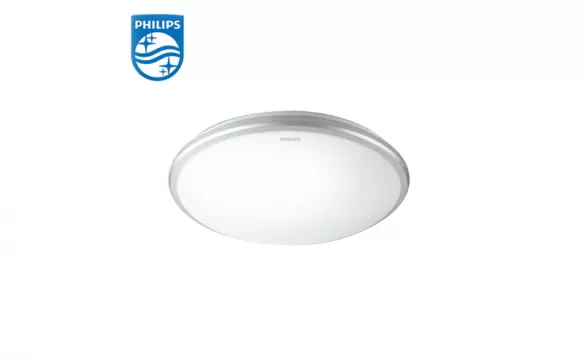
◆ Round panels: Often used in homes, hotels, circulation spaces, and small commercial rooms. They are available in both recessed and surface-mounted versions.
◆ Linear panels: Long, narrow fixtures suited to offices, classrooms, retail aisles, and suspended architectural layouts.
◆ Custom-shaped or modular panels: Used when the lighting is also an interior-design feature. Custom projects require careful coordination of dimensions, drivers, mounting points, and lead times.
Dimensions are not always interchangeable between regions or ceiling systems. Always obtain a dimensional drawing showing the external size, cutout, height, mounting points, and driver location before confirming an order.
7. Standard, Low-Glare, and Prismatic Panel Lights
A standard opal diffuser softens the LEDs and creates a broad luminous surface. This is adequate for many circulation and general-purpose areas. Workplaces with computer screens, classrooms, and control rooms may need more controlled brightness.
Low-glare panel lights use engineered lenses, microprismatic covers, louvers, or other optical systems to limit high-angle brightness. UGR, or Unified Glare Rating, is commonly referenced in indoor lighting design, but a product's stated UGR value should not be treated as a universal property independent of the room. The calculated result also depends on room dimensions, surface reflectance, fixture layout, observer position, and viewing direction.
For a professional project, request photometric files such as IES or LDT data and have the proposed layout calculated. A low-glare claim on a product page is not a substitute for a project-level lighting study.
8. Dimmable and Tunable-White Panel Lights
Dimmable panels allow users or building controls to reduce light output. Depending on the driver, control options may include phase-cut dimming, 0–10 V, DALI, or other wired and wireless systems. Driver compatibility matters: connecting a panel to an incompatible dimmer may cause flicker, limited dimming range, noise, or unstable operation.
Tunable-white panels adjust the correlated color temperature as well as brightness. They may provide a selectable setting during installation or dynamic adjustment during use. Selectable-CCT products are useful when one stock item must serve several room types, while dynamically tunable systems can support different activities or time-based lighting scenes.
Color temperature describes the apparent warmth or coolness of white light and is measured in kelvins. Warm white light is often used in hospitality and relaxed spaces; neutral or cooler white light is common in offices, schools, clinical areas, and task-focused environments. The right choice depends on the application, interior finishes, user preference, and relevant design guidance—not simply on a belief that a higher color temperature is always brighter.
9. Emergency Panel Lights
Emergency panel lights contain a backup battery, use an external emergency module, or operate from a central emergency supply. During a mains failure, the fixture typically runs at a reduced output for a specified period.
These products are used in commercial and public buildings where the lighting design must support safe evacuation. Requirements for operating duration, illumination level, testing, indicators, battery type, and certification differ by jurisdiction. Buyers should provide the applicable standard and project specification to the supplier instead of assuming one emergency configuration is valid everywhere.
Also clarify whether the required mode is maintained or non-maintained. A maintained emergency light works during normal operation and continues at emergency output after power loss; a non-maintained unit normally illuminates only during an emergency.
10. Smart and Sensor-Integrated Panel Lights
Smart panel lights can connect to occupancy sensors, daylight sensors, scheduling systems, gateways, or building-management platforms. Their purpose is not merely remote switching. A well-designed control system can divide a floor into zones, dim fixtures when daylight is available, turn lights down in unoccupied spaces, and report operating status.
Wireless panels may simplify some retrofit projects, while wired systems can be preferable where predictable communication and integration are priorities. Before selecting a platform, confirm protocol compatibility, commissioning responsibilities, offline behavior, user permissions, software support, replacement-part availability, and cybersecurity requirements.
How Do You Choose the Right Type of Panel Light?
Start with the room and installation conditions, then compare performance. The following process prevents many specification errors:
1. Identify the ceiling type. Determine whether the project has a modular grid, plasterboard ceiling, exposed structure, or solid concrete slab.
2. Choose the installation method. Select recessed, surface-mounted, or suspended fixtures based on available space and the intended appearance.
3. Calculate the required light. Use target illuminance, room geometry, surface reflectance, maintenance factors, and fixture photometric data. Do not select a panel by wattage alone.
4. Assess visual comfort. Consider glare, diffuser luminance, flicker, uniformity, and screen use.
5. Specify light quality. Confirm color temperature, color rendering, color consistency, and any application-specific requirements. The U.S. Department of Energy notes that a minimum CRI of 80 is generally recommended for interior lighting, while higher fidelity can involve efficiency and cost tradeoffs.
6. Match the controls. Verify that the driver supports the selected dimming or building-control protocol.
7. Check environmental and regulatory needs. Review voltage, frequency, ingress protection, emergency requirements, safety approvals, and local electrical codes.
8. Compare verified documents. Ask for datasheets, photometric reports or IES/LDT files, test certificates, warranty terms, and installation instructions.
Remember that lumens describe light output, while watts describe electrical input. A higher-wattage panel is not necessarily the best or even the brightest option. Compare delivered lumens and lumens per watt, then confirm whether the beam distribution actually suits the space.
Frequently Asked Questions About Panel Lighting
What is the most common type of panel light?
For modern commercial interiors, recessed square or rectangular LED panels are among the most common options, especially in modular ceiling grids. Back-lit and edge-lit constructions are both widely available. The best choice depends on ceiling dimensions, required depth, photometric performance, budget, and visual preferences.
Are LED panel lights suitable for homes?
Yes. Round or square slim panels can provide general lighting in kitchens, hallways, home offices, utility rooms, and other residential areas. For living rooms and bedrooms, consider warmer color temperatures, dimming, and layered lighting so that the panel does not have to provide every type of light by itself.
What is the difference between a panel light and a downlight?
A panel light generally has a larger luminous surface and a wider distribution intended for broad, even ambient lighting. A downlight is usually smaller and produces a more concentrated downward beam. Panels often suit offices and classrooms, while downlights are useful for focused general, task, or accent lighting. Many projects use both.
Can an LED panel replace a fluorescent troffer?
Often, yes, but replacement should not be based on fixture size or nominal wattage alone. Confirm ceiling-grid dimensions, lumen output, distribution, glare, electrical supply, controls, emergency functions, and code requirements. A lighting calculation can determine whether the replacement maintains the intended illuminance and uniformity.
Which color temperature is best for panel lighting?
There is no universal best color temperature. Warm white can create a more relaxed atmosphere, while neutral white is frequently selected for offices, classrooms, retail spaces, and general commercial use. Cooler options may suit particular task or clinical environments. Interior colors, daylight, operating hours, and user expectations should guide the choice.
How many LED panels does a room need?
The quantity depends on the panel's lumen output and light distribution, the target illuminance, room area and height, reflectance, fixture spacing, and maintenance assumptions. A basic lumen estimate can provide a starting point, but professional projects should use photometric software with the manufacturer's IES or LDT files.
Do all LED panel lights flicker?
No. Flicker performance depends largely on the driver, dimming method, supply conditions, and control compatibility. Ask for test data using recognized flicker metrics, especially for offices, classrooms, healthcare settings, video recording areas, and installations with dimming controls.
Are panel lights easy to install?
Installation difficulty varies by type. A grid-ceiling panel may be straightforward when the opening and wiring are prepared, while recessed cutout, surface-mounted, and suspended models require different hardware and clearances. Electrical installation should follow the manufacturer's instructions and applicable local codes, and should be performed by a qualified person where required.
Conclusion
The main types of panel lighting include edge-lit and back-lit LED panels, plus recessed, surface-mounted, and suspended fixtures. Buyers can further choose among square, rectangular, round, and linear formats, along with low-glare, dimmable, tunable-white, emergency, and smart-control versions.
The right panel light is not determined by one label. Start with the ceiling and mounting method, then compare verified lumen output, distribution, glare, color quality, driver compatibility, dimensions, approvals, and maintenance needs. By matching the fixture's construction and performance to the actual room, you can achieve more uniform illumination, better visual comfort, and a lighting system that is easier to operate over its service life.